
Introduction to Permaculture Principles
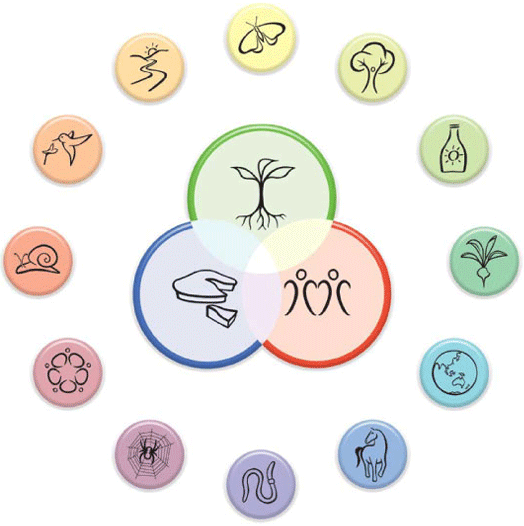
The foundations of permaculture are the ethics (Earth Care, People Care, and Fair Share), which guide the use of the 12 permaculture design principles. These principles are seen as universal, although the methods used to express them vary according to place and situation. They are applicable to personal, economic, social, and political life. The illustration above is from a foundational group in permaculture education: https://permacultureprinciples.com.
These 12 principles are useful thinking tools that help you spot patterns in nature, understand relationships, and design solutions that make perfect sense for your patch, whatever that “patch” might be. Each principle can be thought of as a door that opens into whole systems thinking, providing a different perspective that can be understood at varying levels of depth and application.
Permaculture Principle #1 – Observe & Interact
OBSERVE and INTERACT is the foundational permaculture principle that directs you to study a system—whether a garden, piece of land, or social environment—before making any permanent changes. By dedicating time to watch natural patterns like sunlight, water flow, and existing ecosystems, you ensure that your interventions are informed, effective, and require fewer corrections later.
Key Concepts of “Observe and Interact”
- The One-Year Rule: Ideally, spend a full year observing your land across all four seasons before installing major structures. This reveals critical microclimates, wind directions, and water drainage patterns you might otherwise miss.
- Active Engagement: This is not passive waiting. While you observe, you can still perform small, reversible actions (like starting a kitchen garden) to learn how the system responds.
- Problem as Opportunity: Instead of fighting natural challenges, observe why they exist. For instance, persistent weeds might indicate highly fertile soil; instead of just removing them, you can plant crops that thrive in that specific spot to utilize the resource.
- Iterative Learning: Follow a loop of:
- State the problem.
- Propose a small intervention.
- Implement and watch the results.
- Reflect and adjust your plan based on what you learned.
- Applying “Observe and Interact”:
- In Gardening: Watch where snow melts first or where water pools after rain to identify the best spots for specific plants.
- In Daily Life: Apply the same logic to personal habits, work projects, or relationships—slow down, listen, and understand the current “ecosystem” before trying to fix or change things.
- Avoid Assumptions: Always prioritize what you actually see over what you imagine is happening. Your observations might prove that your initial plans were misguided.
Next, we will explore how “Observing and Interacting” applies to forest management. Keep an eye on this Forest Watch post!