
Regenerative Agriculture Goes Mainstream
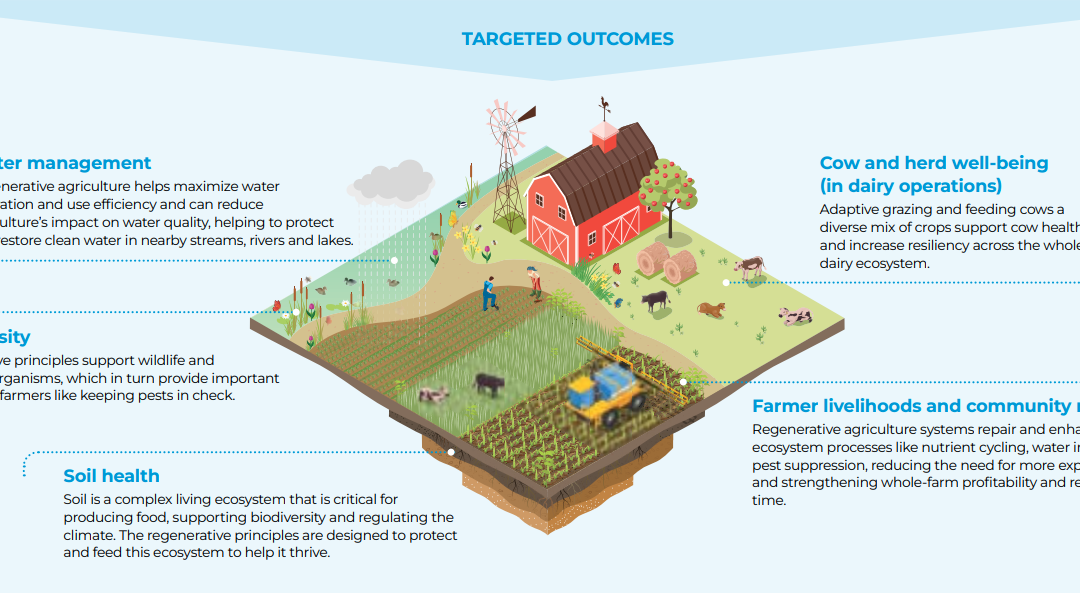
As we welcome June, it’s worth noting a significant shift taking place around regenerative agriculture on a global corporate scale. Concepts long championed by permaculture practitioners, regenerative farmers, and land stewards are increasingly appearing in the sustainability strategies of some of the world’s largest food companies.
In recent years, major corporations such as General Mills, Danone, and Nestlé have announced investments and programs focused on regenerative agriculture. While the scale and effectiveness of these efforts remain subjects of ongoing discussion, they signal growing recognition that healthy soils, biodiversity, and resilient farming systems are essential for the future of food production.
General Mills has committed to advancing regenerative agriculture on one million acres of farmland by 2030, supporting practices such as cover cropping, reduced tillage, and improved grazing management.
Danone has developed regenerative agriculture programs in North America and Europe that emphasize soil health, biodiversity, farmer participation, and long-term farm resilience.
Nestlé has committed approximately $1.3 billion toward accelerating regenerative agriculture across its global supply chain, supporting approaches such as agroforestry, intercropping, soil conservation, and livestock integration.
These developments raise important questions. Can large-scale corporate commitments help accelerate the adoption of regenerative practices? How can farmers, communities, and consumers help ensure that these commitments lead to measurable improvements in soil health, ecosystem function, and farmer well-being? What role can local and regional networks play in demonstrating what successful regeneration looks like on the ground?
For members of the Northwest Permaculture community, regenerative agriculture is not a new idea. It is a lived practice rooted in observation, stewardship, and relationship with place. Yet as these principles gain wider recognition, new opportunities may emerge for education, collaboration, and broader public awareness.
Whether these corporate initiatives ultimately transform food systems remains to be seen. What is clear is that regenerative agriculture has moved from the margins into conversations taking place at every scale—from local farms and community gardens to global supply chains.
Learn more:
Learn more about these initiatives:
General Mills
General Mills reports that more than 800,000 acres are currently engaged in its regenerative agriculture programs, putting the company more than three-quarters of the way toward its goal of advancing regenerative agriculture on one million acres by 2030.
• 2026 Global Responsibility Report:
https://globalresponsibility.generalmills.com/
• 2026 Report Summary:
https://www.generalmills.com/news/press-releases/general-mills-reports-its-imact-in-2026-global-responsibility-report
• Regenerative Agriculture Initiative:
https://www.generalmills.com/how-we-make-it/healthier-planet/environmental-impact/regenerative-agriculture
Danone
Danone’s regenerative agriculture work focuses on soil health, biodiversity, animal welfare, and farmer resilience through partnerships with dairy producers and other agricultural suppliers.
• Regenerative Agriculture Program:
https://regenerative-agriculture.danone.com/
• Danone Regenerative Agriculture Policy:
https://www.danone.com/sustainability/our-approach/policies-positions-reports/policies-and-positions/regenerative-agriculture.html
Nestlé
Nestlé has committed approximately CHF 1.2 billion (about US$1.3 billion) to help scale regenerative agriculture across its global supply chain, supporting practices such as agroforestry, intercropping, soil conservation, and livestock integration.
• Nestlé Regenerative Agriculture:
https://www.nestle.com/sustainability/nature-environment/regenerative-agriculture
• Regenerative Food Systems:
https://www.nestle.com/sustainability/regenerative-food-systems