
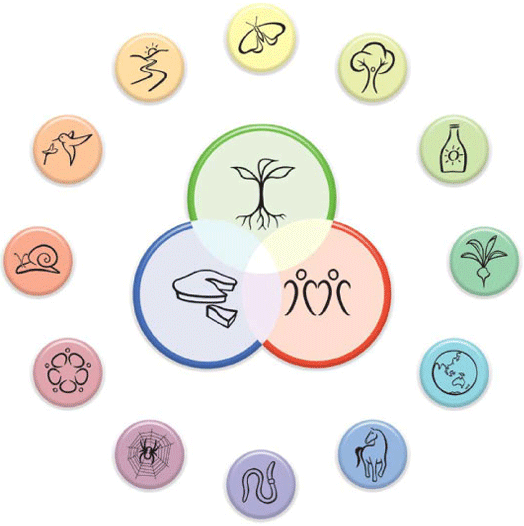
Catch and Store Energy: Permaculture Principle 2
Permaculture Principle 2 invites designers and gardeners to work with natural abundance so that their systems remain resilient through times of scarcity. Rather than treating energy as something to consume and discard, this principle encourages us to view it as a flow that can be slowed, captured, and conserved in living landscapes, built structures, and even social systems.
The Meaning of the Principle
At its heart, this principle is about collecting resources when they are plentiful so they can be used later in times of need. The proverb “make hay while the sun shines” and the icon of energy stored in a container remind us that there is a limited window in which to harvest and save abundance.
Energy in permaculture comes in many forms: sunlight, rainwater, wind, soil fertility, biomass, and human effort are all valuable flows that can be caught and stored. When designs intentionally slow and hold these flows, they reduce waste, cut dependence on external inputs, and build long‑term resilience.
Practical Ways to Catch Energy
There are many ways to put this principle into action:
- Collect rainwater in tanks or ponds during wet periods for use in dry times.
- Use solar technologies, from passive solar design to panels and solar hot water, to convert sunlight into usable energy.
- Build deep, humus-rich soil and maintain abundant biomass so that nutrients, water, and carbon are stored in the landscape.
- Preserve harvests through drying, fermenting, and storing to extend the usefulness of seasonal abundance.
- Invest in energy in knowledge, tools, seeds, and relationships, which can be drawn on when conditions change.
Why It Matters
Energy is fleeting yet essential for living systems and human societies, so capturing it when it is available is both an ecological and ethical act. By treating every site—whether urban yard or rural farm—as a place that can generate, store, and cycle energy, permaculture design shifts us from reactive consumption to proactive stewardship.
Systems designed around this principle tend to be more sustainable, self‑sufficient, and adaptable in the face of climate and economic uncertainty. Over time, the stored energy in soils, structures, and communities becomes a quiet reserve that supports life, creativity, and regeneration long after the original moment of abundance has passed.
🎵 Enjoy this “catchy” Catch & Store Song:
Watch and listen here → Catch & Store Song by Charles Mgee
Key Source: PermaculturePrinciples.com
Author Willi Paul