
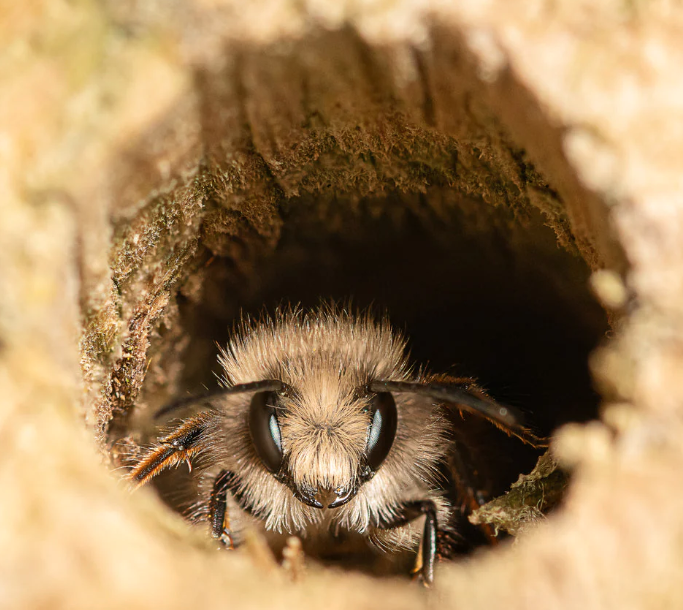
Free Mason Bees – They are still in tubes, need to be cut out, and hatching out of their cocoons right now. You will need to open the tubes immediately. We have taken all we need and have about 100 6 inch tubes left that contain 300-400 bees. we are near Belfair State Park. text 425-765-5601 (Next Door post)
Meet the Mason Bee
Mason bees are highly efficient, native pollinators—up to 120 times more effective than honey bees—crucial for early spring fruit trees (apples, cherries, pears) and berries, as they work in cooler, wetter weather. As solitary, non-aggressive, and gentle pollinators, they are easy to manage in gardens and thrive without hives or honey production.
 Oregon State University +5
- Super Pollinators: Unlike honey bees that pack pollen on their hind legs, mason bees (member of the genus Osmia) carry pollen on their belly hairs, leading to much higher pollination rates as they fall off during visits to flowers.
- Early Spring Workers: Mason bees emerge earlier in the season than honey bees, aligning perfectly with the blooming of early fruit trees, even in cold and wet weather.
- Hyperlocal Foraging: They have a short foraging range (often only a few hundred feet), meaning they focus their efforts on your garden, maximizing yield on fruits, nuts, and native flowers.
- Gentle and Safe: They are solitary and non-aggressive; males lack a stinger, and females rarely sting, making them safe for family gardens.
- Easy to Raise: They nest in holes in wood, reeds, or specialized boxes, making them ideal for urban and suburban gardeners wishing to boost local ecosystems.
- High Biodiversity Support: They support local ecosystems and biodiversity, helping both wild plants and cultivated crops.
Oregon State University +8
By providing mud (for building nesting walls) and installing mason bee houses, you can easily support these beneficial insects.