
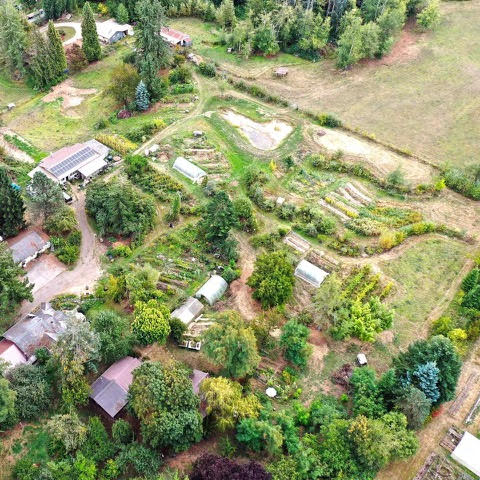
Communities
Many people recognize that our current economic and social systems are placing increasing strain on the natural world, local communities, and our own well-being. At the same time, growing numbers of people are searching for healthier, more connected, and more meaningful ways to live.
Across the world, intentional communities and ecovillages are demonstrating practical alternatives. They offer opportunities to live more cooperatively, steward land regeneratively, strengthen local economies, and create a greater sense of belonging and purpose. These communities are not simply places to live—they are living laboratories for a more resilient, equitable, and regenerative future.
A growing network of Pacific Northwest landholders, community organizers, permaculture practitioners, and prospective community members is working together to support the creation of thriving intentional communities and ecovillages. By sharing knowledge, resources, and experience, we aim to help people find pathways into community living while supporting the long-term success of new and existing projects.
We believe that healthy communities arise from healthy relationships. While many intentional communities have struggled with governance, communication, and interpersonal challenges, these difficulties also provide valuable lessons. Successful communities cultivate a culture of continuous learning, humility, accountability, and mutual support. Rather than striving for perfection, they develop the capacity to learn, adapt, and grow together over time.
A Practical Framework
A thriving intentional community or ecovillage:
- Supports the well-being and personal growth of its members
- Restores ecosystems while building healthy soils, biodiversity, and climate resilience
- Provides affordable, low-impact housing options
- Produces food and other necessities using regenerative methods
- Fosters meaningful relationships, cooperation, and shared purpose
- Encourages economic models that keep wealth circulating locally
Small groups of individuals, couples, and families can work together to establish communities on shared land or join existing projects. Communities may adopt cooperative ownership structures, land trusts, housing cooperatives, or other legal frameworks that balance individual autonomy with collective stewardship.
Rather than viewing land primarily as a commodity, these models treat land as a long-term commons—an asset to be cared for and passed forward to future generations. Members gain secure access to housing, gardens, workshops, and common spaces while contributing to the stewardship and success of the larger community.
Various equity-sharing and cooperative financing models can make community living more accessible. Members may contribute through financial investment, labor, skills, infrastructure development, or other forms of participation. Clear agreements help ensure fairness, transparency, and long-term stability while allowing members to build equity and benefit from improvements they help create.
Land Stewardship and Regeneration
Thriving ecovillages place the health of the land at the center of community life. Through permaculture design, agroforestry, regenerative agriculture, ecological restoration, water conservation, and habitat enhancement, communities become active participants in healing the landscapes they inhabit.
Land trusts and stewardship agreements can help protect these regenerative values over the long term while ensuring that community resources remain aligned with their intended purpose.
Governance and Community Culture
Healthy governance is essential for community success. Communities benefit from clear agreements, effective communication practices, conflict-resolution processes, and decision-making systems that encourage participation while maintaining accountability.
Founding members often help develop the policies, governance structures, and cultural agreements that guide community life. Ongoing training in facilitation, mediation, and collaborative leadership strengthens the community’s ability to navigate challenges and maintain healthy relationships.
Skills and Contributions
Thriving communities depend upon a diversity of talents, experiences, and perspectives. Valuable contributions may include:
Land and Infrastructure
- Permaculture and food production
- Forestry and orchard management
- Ecological restoration
- Natural building and construction
- Maintenance and site operations
Organization and Enterprise
- Facilitation and leadership
- Administration and finance
- Entrepreneurship and cooperative business development
- Architectural and landscape design
- Education, outreach, and communications
Community Well-Being
- Healthcare and caregiving
- Conflict transformation and mediation
- Arts, culture, and celebration
- Mentoring and education
- Spiritual and personal development
Guiding Values
Some values that help thriving intentional communities flourish include:
- People Care, Earth Care, Fair Share
- Stewardship of land and future generations
- Cooperation over competition
- Integrity and personal responsibility
- Lifelong learning and adaptability
- Creativity, courage, and innovation
- Diversity, inclusion, and belonging
- Healthy relationships and mutual support
- Meaningful work and purposeful living
- Connection with nature and place
Join the Movement
A growing movement of intentional communities and ecovillages is emerging throughout the Pacific Northwest and beyond. Whether you are seeking community, stewarding land, developing a project, or offering skills and support, there are many ways to participate.
Together, we can create thriving places where people, land, and future generations flourish.
A project for resilient communities is growing and welcomes collaborators, whether prospective members, landholders, or as part of our support team. Contact us.
I’m not quite sure how to best tie in, but I own Hawthorn Farm in Woodinville, WA, and am thinking about succession planning and general community permaculture living. I’ve been here 20 years and my husband and I have developed quite a lot. 7 of us live here at the moment.
Interested in brainstorming and collaborating with other community leaders, particularly about how to preserve a desirable pattern of land use into the future.